
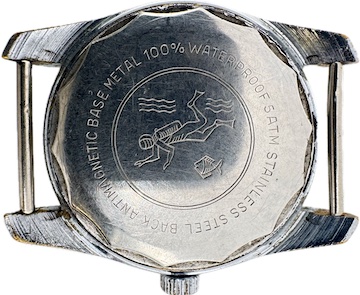
How do I love thee? Let me count the ways.
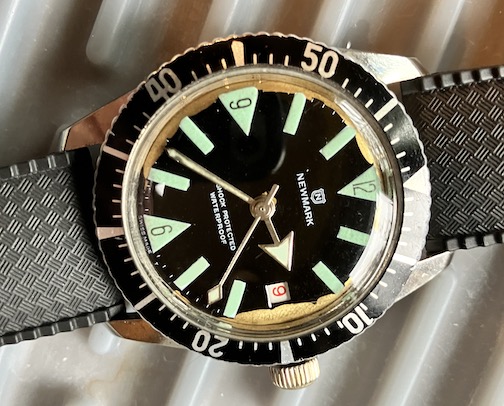
OK, I’ll admit I’m not sure what’s coming yet in this post. I needed to get writing. I have a running list of other topics, but this one keeps nagging me. I have posted on and around the topic of divers and vintage-inspired divers before, but with this I’m going to try to stick to the source; the vintage watches. I love these old skin divers!
I’m no expert on this subject or any particular manufacture in this arena, but I have collected some observations over the last several years. I have also collected some watches in this zone of mid-century skin divers. This is a huge topic and a potential trap to write myself into. What made me do it is my continuing interest in dive watches, particularly from the ’60s and ’70s. There is just something about the designs that gets me excited about that certain look that you just know when you see it.
What is Mid-Century?
It may seem obvious that mid-century means the 20th century and the years in the middle of that century, so, 1940s to 1970s? Taking watches under water was just beginning in the 1940s and didn’t really get rolling until the 1950s. That leaves the 1960s and 1970s because after that you are out of Mid-century and getting into neo-vintage 1980s and 1990s. Aside from military or professional diving, popular sport scuba diving really was coming into vogue in the 1960s and 1970s.
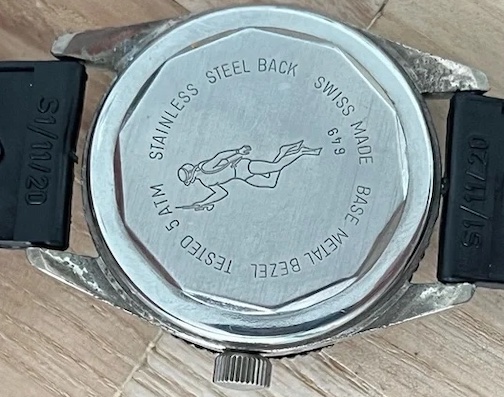
This period of 1960s and 1970s is what I think of when I think Skin Diver rather than Diver. I’m thinking about simpler, less expensive types of divers that amateur skin divers and snorkelers would purchase, not the most capable and expensive diving watches on the market. I’m not going to talk about the usual brands we all read about like Rolex, Blancpain, Longines, Panerai, Doxa, Eterna, Zodiac and that lot. I’m thinking about the brands nobody knows, the generic skin divers.
What is a Skin Diver?
Let me allow AI-guided Google tell you: “a watch designed for recreational diving, which is smaller, thinner, and more comfortable than a standard, bulky professional dive watch. These watches are often between 38-40mm in size, have water resistance of around 100-300 meters, and feature key elements like a screw-down crown for water resistance. The term was first used by the brand Longines in the 1950s and 1960s for watches intended for hobbyist divers. “
I’m going to amend this a bit. I’m going to go with 28mm-40mm, with most being 36mm. I’m going to say 50-200m WR, not 100-300. Also say that maybe they didn’t have a screw-down crown. For more color, I’m going to play with the obvious word here; Skin. Skin, as in no wet suit, no tanks, as some might define it. Think warm water, snorkeling and diving. Think the old tv show Flipper! to set the scene. Recreational divers with or without an air tank for short dives. Of course there could be scuba tanks, wet suit or dry suit and other gear in someone’s definition, but I don’t want to be too technical in defining serious versus recreational scuba diving.
The reason I am doing this is to get in the mindset of your average Joe or Jane who doesn’t need a Longines or a Blancpain and doesn’t want to get that serious. Cost is a factor here. I don’t want to say there is a clear line between recreational and professional dive watches because there is any number of overlapping features a watch could have and many price points and specs to consider. Most had base metal cases that were plated. Generally I think of a skin diver as a dive watch lite. Simpler.
The Look
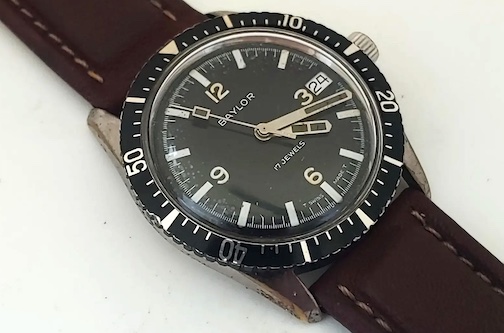
If you are reading this you know what I mean about the look of a skin diver versus a diver. The definition above doesn’t really get into the look I am describing. To simplify, my mind’s eye sees a flat-ish, sort of wide, slightly curved case deck with a rotating bezel, usually black, and long-ish lugs on a rubber, mostly Tropical-style, strap. The dial is simple and bold as are the hour and minute hands, one usually having a arrowhead, and a second sweep commonly with a lollipop or dot. Lots of black and white. Easy to read. There were cheap, generic skin divers and high-quality skin divers that had, the look. I’m mostly thinking about the low-end.
Another visual device that is one of my favorite skin diver features is the triangle hour markers, sometimes called Sharks teeth. Usually at 12, 6, 9 and 3 if no date window. Love ’em! These may have been devices to resemble earlier Eternas and Zodiacs.
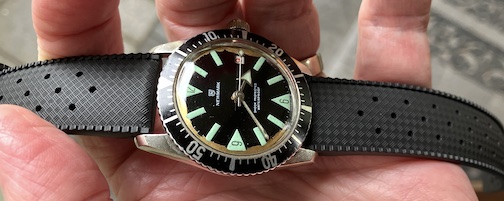
The above Newmark skin diver, I think, is a great example of the look. A classic Skin Diver; dial, case shape, size, manual wind, acrylic crystal, rubber all scream Skin Diver! The Newmark has a distinctive diamond end on the second hand.
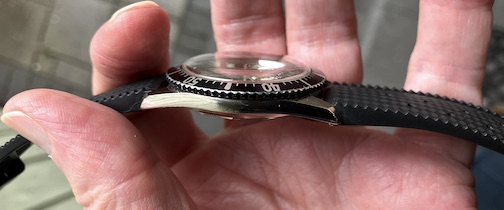
The dial is suffering from chipping paint around the edges, but otherwise it is in great working shape. 35mm, 43mm length, 11mm thick, 20mm lug width. It has a Swiss EB8800 movement.
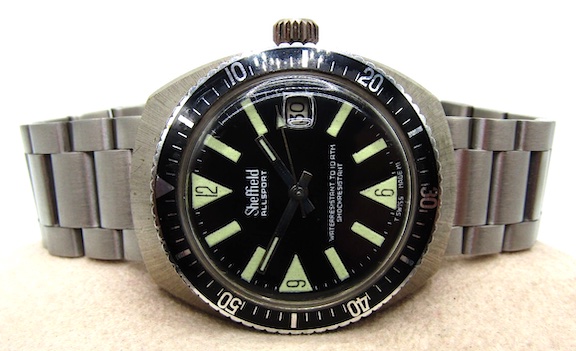
Notice in the above image Sheffield has used the same dial and bezel in this model as used on the Newmark, and a similar Andre Bouchard. Typical for the period.
Wind Me Up!
Most of the Mid-cen skins I thinking about use mechanical, hand-wound, three hand, date or no date, 17 jewel, Swiss movements. There could be autos, too, but that starts getting into a higher price range. Also, you have to consider at this time, before the quartz boom, your basic wrist watch was a hand wind watch. Automatic or Self-winding movements generally meant an upgrade. Most of the current vintage-inspired new designs and reissues are autos, but back in the ’60s and ’70s the manual wind was the norm.
A la carte Watches
If, like me, you scan the listings of eBay and see lots of vintage skin divers, from different brands that seem to look alike, you are probably right. That is because in that mid-century era in the watch industry, particularly with Swiss-based manufacturing, watch component manufacturers specialized in certain components and sold to many brands. There were case makers, movement makers, dial makers, crystal specialists, and bracelet makers each doing their thing for multiple brands. So, you could see the same case and dial from two different brands using different movements and selling for different prices.
There were watch assemblers, for lack of a better term, who would build complete watches for numerous brands by obtaining all the components from a list of specialized suppliers. They just had to have the dial maker print your logo on the dial. Of course there were many versions of this process to include partial in-house manufacture or assembly, but you get the point.
This is why I mentioned at the start that I could easily write myself into trouble. I might not have the historic references or the vocabulary or the complete understanding of the relationships that brought about all these skin divers that are the subject of this post. What I want to establish is that during this time there was what I call the generic diver. They were 36mm, 17 jewel, hand wound, 50-100m WR, with friction fit rotating bezel on a black rubber strap.
So many of the skin divers of this period looked alike because they were made up of generic stock parts combinations. If you can’t find a style in a brand you liked, keep looking and you will probably see that same look from another brand!
Size, size, size
A reason many current watch people shun the older skin divers is because most of them were under 40mm. So many of them are 36mm. This is always a topic ripe for discussion. There are some 31-32mm models out there too, that may have been marketed at women or youth. First of all, for many forgotten or unknown reasons, watches were just smaller tin the 1960s. Also, for practical reasons, smaller watches do not get in the way of physical activities. Some may say bigger watches are easier to read, but, most of these had simple black dials with bold white hands and numbers or markers that made them quite legible. That is a common characteristic of most skin divers; simple dials.
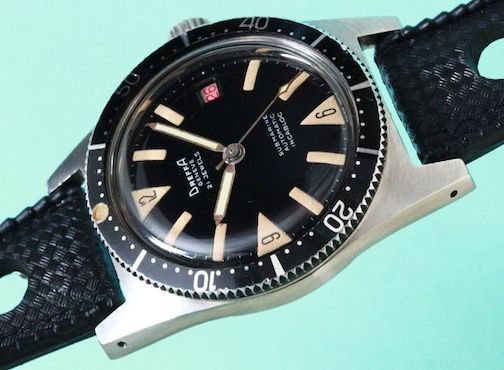
The above Dreffa is picture perfect; great skin diver case shape, triangle dial, tropic rubber, domed acrylic. Doesn’t get much better. But this is a step up from the low-end. Looks like a stainless case, and it is an automatic.
Jumping to the present, it seems most watch companies reissuing old skin diver designs can’t resist making them bigger than the originals. Longines, Newmark, Sheffield, Zodiac, and others did this, then later added smaller versions as trends changed. I recently picked up a Caravelle(Bulova) Sea Hunter you can read about here. It too got bigger, from 37mm to 39mm. Then sometimes, a brand decides to stick to original size for accuracy. I can’t think of any diver off hand, but Praesidus gives us a 32mm A-11-type watch and Nivada Grenchen stuck to 35mm with an Antarctic reissue.
Later in the ’80s and ’90s, Tag Heuer was known for offering several diver styles in three sizes, most commonly translated as youth, ladies, men’s sizes. But in the ’60s and ’70s this was not necessarily the case, they were just small. Why watches are bigger now is a good question. Also worth contemplating is why watches were so small before. One idea could be how a watch is conceived of as a tool versus a fashion accessory? Bulk is a problem in any physical activity, but legibility is also a factor. People are bigger, on average, now.
I can see why a professional diver might want a larger, bulkier watch for legibility and knock resistance, whereas a casual snorkeler might want a small, lightweight tool. Cost is an issue, too. The more material and features a watch has means it will have a higher price. A stainless steel bracelet is also more costly than a rubber strap.
Mortima and Cattin&Cie
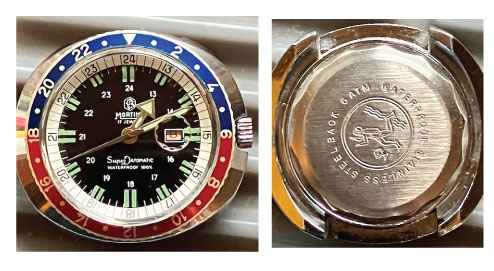
While researching my ’70s Mortima Super Datomatic I noticed Mortima was a French brand of Swiss Cattin&Cie who made many kinds of dive watches in the ’60s and ’70s. I kept seeing similar components and markings among various watches from different brands in images from online. One thing I kept seeing was the “Frogman and Fish” logo, like on my Mortima, on several brands. Like I mentioned above, Cattin&Cie was one of those companies building watches for many brands.
This Datomatic is not the typical ’60s Skin Diver, being lug-less with an oval case, but the hand set is typical skin diver. It has definite 70s case styling. 43mm wide, 40mm high, 13mm thick, Cattin 66 movement. Though called a 17 jewel movement, I have read a couple of the jewels are just dummy jewels with no function-so really a 15 jewel movement. The power reserve is supposed to be 40 hrs, but seems shorter.
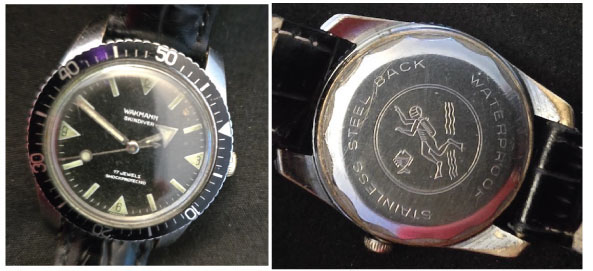
In the above no-date Wakmann Skin Diver images you can see some familiar details. Its a great looking specimen, dial similar to the Newmark and Sheffield above, but Wakmann has a distinctive lollipop second hand. Also note the Cattin&Cie Frogman.
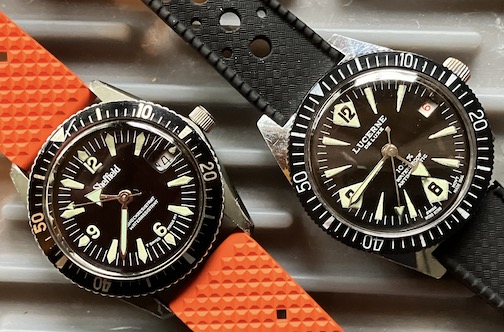
Two of my fun skin divers shown above are good examples of what I think are a early ’70s a Sheffield and Lucerne composed of standard parts but having a bit of flair. I got them both in need of repairs but otherwise in good shape. After servicing and new crystals they are fun to wear. These dial designs I have seen on other brand’s releases, too. The Lucerne dial is more unusual with a combination of diamonds and pointy claws. In stead of the standard triangle markers you get diamonds and elongated triangles in a starburst effect. The Sheffield markers are almost like boats on a compass, similar to what I have seen on some old Bulova Marine stars. The Sheffield has a green PVC coating that I have not seen before. Sheffield has reissued modern 38mm and 40mm versions of these skin divers with Seiko and Miyota movements. They look great! Best of all, they are still priced as the common man’s watches they were originally.
Big Number
Another notable look of the period was what I call the Big Number look. This was popular in France. The emphasis is on the numbers instead of stylized hour markers. I will venture to say this came about in the late 60s, getting away from detailed dials to get more lume on fat numbers and long bars.
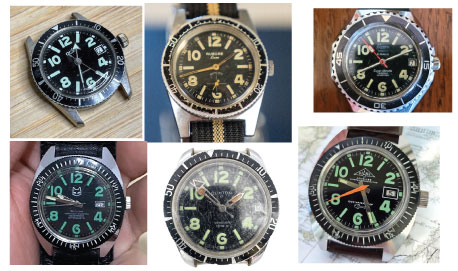
As you can see in the above group of six, we have six different brands using the same basic dial! Top are are brands Acta, Aurore, Bessa, Second row has “cat” brand, Clinton, and Diane. The cases are all a bit different, as will be the movements and hands and bezels. Starting to appear, too, are the more 70s look stick hands. Notice the Aurore has a small seconds and no date. I’m not as enthusiastic about this look. I am more of a triangles guy. For a modern version of this look at Airain’s Sous Marine, which are great and have a classic skin diver case like the Aurore above. Wolbrook is also doing modern autos with this vintage-inspired look.
OK, Seiko
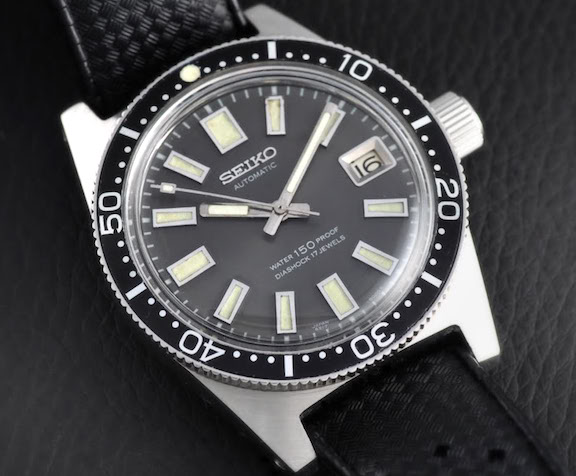
I suppose I have to throw in the classic Seiko 62MAS of 1965. It has the quintessential skin diver case, but I have to say the dial and markers was ahead of its time and outside the Swiss stock catalog of parts. It had a more 70s look that was adopted by many. It was automatic, had applied hour markers was was a better engineered watch than your generic Swiss kit brands. I would love to have one of these but don’t want to pay for one in good condition! I think I would go for a newer reinterpretation.
Since I threw in a Seiko, I need to give Citizen some time. I am new to these ’60s-’70s Citizen divers, but here is one I found on sweep-hand.org. Again, these are a different type of mid century diver than the Swiss-based kits. This is a manual wind, in-house watch in the Seven Stars series from 1965-69, I think. I think these were more in the 38mm-40mm size?
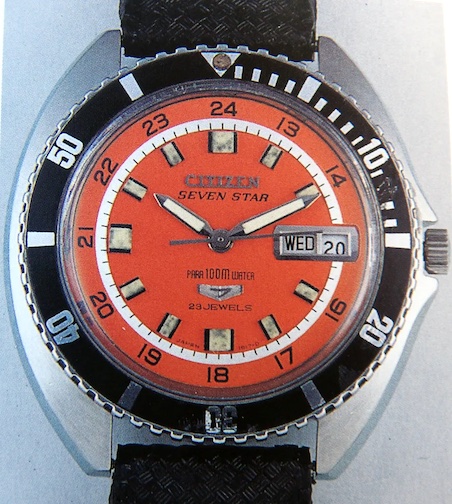
What I like about these old Citizens is the bold bezel numbers. I also link this hour marker style to the 70s rather than the 60s, so it shows how designs overlap periods. This case shape is rounder than the style I prefer. These progressed into the 80s. In 2022 Citizen released the NB6021-17E, a 41mm auto inspired by the 1977 Challenge diver series. I really like it!
Back to the Swiss-based skin divers, this next little guy I just had to have when I saw that silver metal bezel and funky dial /hands. I’ve always loved the skin divers of any brand with silver, no-insert bezels. Its tiny at 31.5mm with a screw-down crown (600ft), and irritating 17mm lug width. It could have been meant for women or youth swimmers. It has a DeRowe450 mechanical movement with a pretty low power reserve, but I haven’t measured it. Several brands produced watches in the 32mm size range.
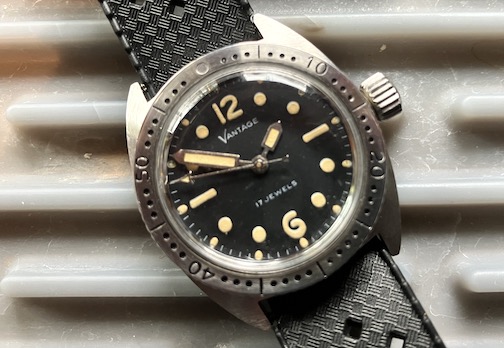
Like I said, I love the bezel and the paddle hands. The dial layout is a progression to using dots for hour markers with bars and only 12 and 6 numbers. Vantage was a Japan-based company set up by Hamilton to get some low-end market share, and has a confusing history of varied types of divers with components from all over the world. Vantage also sold the standard 36mm Swiss component kit skin divers too.
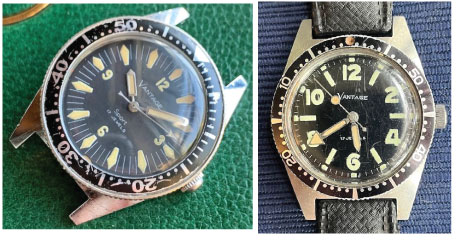
You can see above some familiar dials, but these have Vantage on them this time! The one on the left looks like a Sheffield and the one on right uses the Big Number French look. These two are more in the 36mm range and could have a Standard Time or other movement.
Another kit-type Skin diver from the 1960s is this example below of a Ruff&Tuff auto. The dial layout is a popular one of the period and take on more of an Explorer look with 6, 9, 12 and bars with date. Often with a 23-25 jewel auto movement with date.
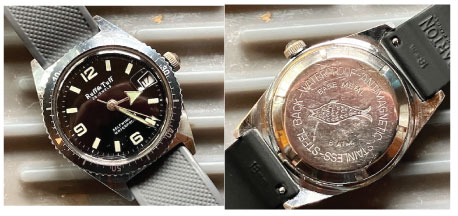
We’ve seen these hands and dial on other brands. The movement is a Förster197 with a quick-set date, I think it is called, but the thing about these old movements is setting the dates can be a drag! I am constantly switching watches and rarely wear one watch more than a day or two. So when ever I pick up one of my vintage watches the date is rarely easy to set. Another thing to consider when deciding on vintage or vintage-inspired/reissues. The bezel is not impressive and I don’t know if it is original? I really like wearing this watch and like the curve of the case and fit of it 45mm lug to lug. The movement is smooth but runs slow, besides the date setting. It may be a little boring looking compared to others.
There’s a great fish engraved on the case back, but I don’t know the maker. Its a 60m Water resistant case, so there is quite a range of depth ratings among the skin divers of the period.
Ok, Zodiac
I had to go there even though I sort of put the old Zodiacs a little above the generic Swiss kit skin divers. They don’t have the classic skin diver case and are moving to more of a quality diver, especially on a bracelet. Of course the Sea Wolfs are great looking with the silver bezel, dauphine-style hands, and triangles! The 35mmx43mm sizing is great, they are auto and 200m.
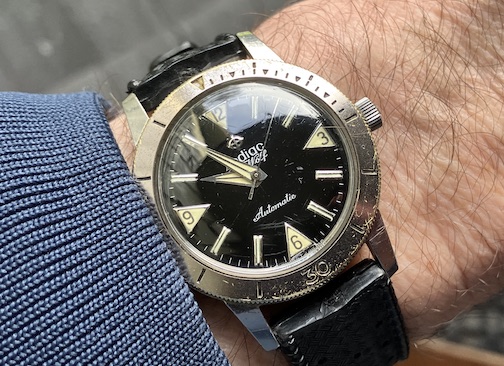
Mine needs some refurbishing. It has a lot of battle scars and needs servicing. The friction fit base metal bezel has some plating scratched off and the original crystal is marked up. The dial and hands look great. When wound it keeps great time, but feels really dirty to set or wind.
What a looker! Classic triangles and bars and no date. One of my favorite all-time vintage diver looks. Right up there with the Longines Nautilus and Blancpain Fifty Fathoms. It does look older, sort of that ’50s look? Again you have the option for a bigger, 39mmm modern reissue or a 36mm LE manual, but, Zodiac/Fossil is looking shaky right now. I think Zodiac/Fossil messed this reissue up: Too big, too many, too weird. Easy for me to say…The whole name rights sale and resulting “Super Sea Wolf” was probably a bad idea. The 1953 controversy,too. It’s a tough balance for doing an authentic reissue and still moving ahead.
I don’t know where to stop with this post. There are so many mid-century skin divers from so many brands. But this next example I stumbled across is a fun one with it’s silver bezel.
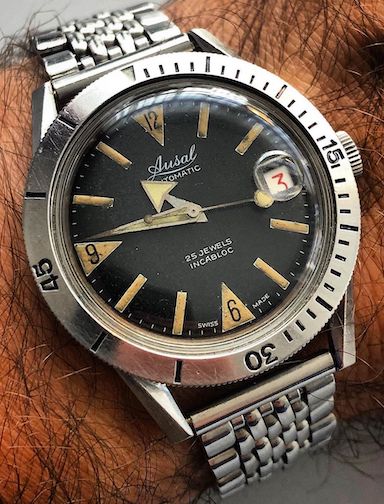
This guy has a strong Sea Wolf feel with that bezel, and has the classic triangle and bars dial. The cool handset with arrow and dauphine/dagger, then lollipop is top notch period. As for the script branding and red date, well, its just awesome. I don’t know if that bracelet is original. I would slot this in a price range below the Zodiac and above the Newmark? A little more refined French Swiss kit diver with a more in-house feel. Lots of drama.
There is another low-end stock skin dive look I wanted to mention. I’ve seen a lot of examples and I’m not sure what to call it? Its a crow between the Longines look and the Explorer look. The look even starts to drift towards Seamaster 300, but the bezels don’t cut it. Also, if the minute hash marks are not long enough, it loses impact.
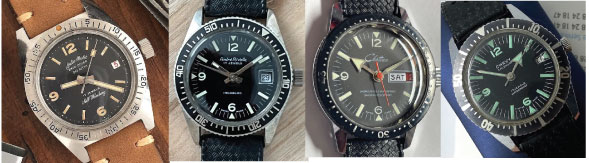
They all have the small numbers at 6, 9,12, long-ish bars and a date. The Ruff&Tuff mentioned earlier was the same. The Andre Paiet is an auto–a little higher up the price scale, while the Chateau has day and date complication. Two have baton hands and two the iconic stock skin diver arrow. This look is a little more boring than the triangle look, but a functional looking low-end tool watch.
Don’t forget Timex
As I wind down this post, I have to mention the Timex skin divers of the late ’60s to early ’70s. They are a favorite of mine with a unique look. Being Timex, these were not kit watches with Swiss components. They were even more low-end than your stock Swiss manual 36mm skin diver. They started with the manual wind M25 movement and got into the electric era later.
From 1966-68 they were no-date 1257s then got the date complication in 68 becoming 2157s. These were 200ft(60m), snap back, no screw-in crown, so about as basic a skin diver as you can get. Not a legacy piece to say the least, the weak link was the not so robust movements.
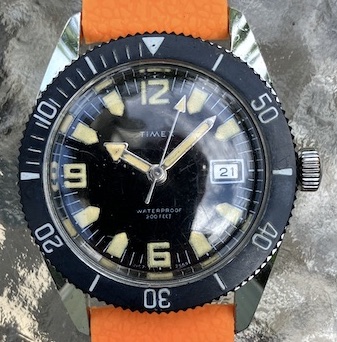
They have a unique hand set with a smaller arrow head on the hour hand and another arrow pointer for the second sweep. They have an interesting number style and what I call home plate shaped hour markers. As I have written before, I would Love to see a reissue of these unique looking skin divers.
Enough of This
There are so many more skin divers if various sub-groups I could talk about but I have to get through with this! Its hard to find good examples of the low-end or medium priced skin divers because they have fallen apart after 50 years or so. It was a simpler time. We didn’t expect as much from our watches as we do now.
More waterproof 100m quartz models started replacing this type of watch by the end of the ’70s. Now the standard is 200m, a stainless case, auto with sapphire and throw in ISO certification lume and bezel.
The interesting thing to me, that I have tried to convey is the large number of brands selling what were essentially generic skin divers in a way similar to the 90s where licensed branded quartz fashion watches were appearing everywhere. Brands just picked from a menu of parts and then had their name printed on the dial. Some brands had more exclusive components while others sold watches that were exactly like another brand but with a different name.
They had a lot of charm and this is supported by all the vintage inspired options we have now. Vastly better watches, and vastly higher prices. We want to move on, but we can’t pull ourselves away from the romance of the early days of skin divers and divers. You can find a vintage-inspired diver in just about any price point you want.
There is no replicating the feel of a vintage watch with all its shortcomings and fragility. The patinas and scars, the size. They really show you how far watches have come. After trying to rescue a few of them I can appreciate the modern homages. I just wish the reissues were more authentic with size and didn’t always have to move up-scale.
As enthusiasts we want the look of vintage, the specs of modern tool watches and an automatic movement to show we are above quartz. I’d like to see more reissues in smaller sizes with quartz, solar quartz or inexpensive manual wind movement and acrylic! That would give a better vintage experience. The two upgrades I do approve of are better water resistance and better lume.


Leave a Reply to Bob Reiner Cancel reply